
Caregivers and Families: What to Do With a Loved One’s Leftover Supplies
- Matt Frank
- September 23, 2026
- 11:41 pm
In This Article
Start With Need, Ownership, and Authority
Keep any supplies the person still needs and do not assume that physical possession makes a caregiver or relative the legal owner. Before selling leftovers, confirm who owns them and who has authority to act. Products must also meet the current catalog, seal, date, condition, and program-eligibility rules. Estate and property rules vary, so seek appropriate local advice when authority is uncertain.
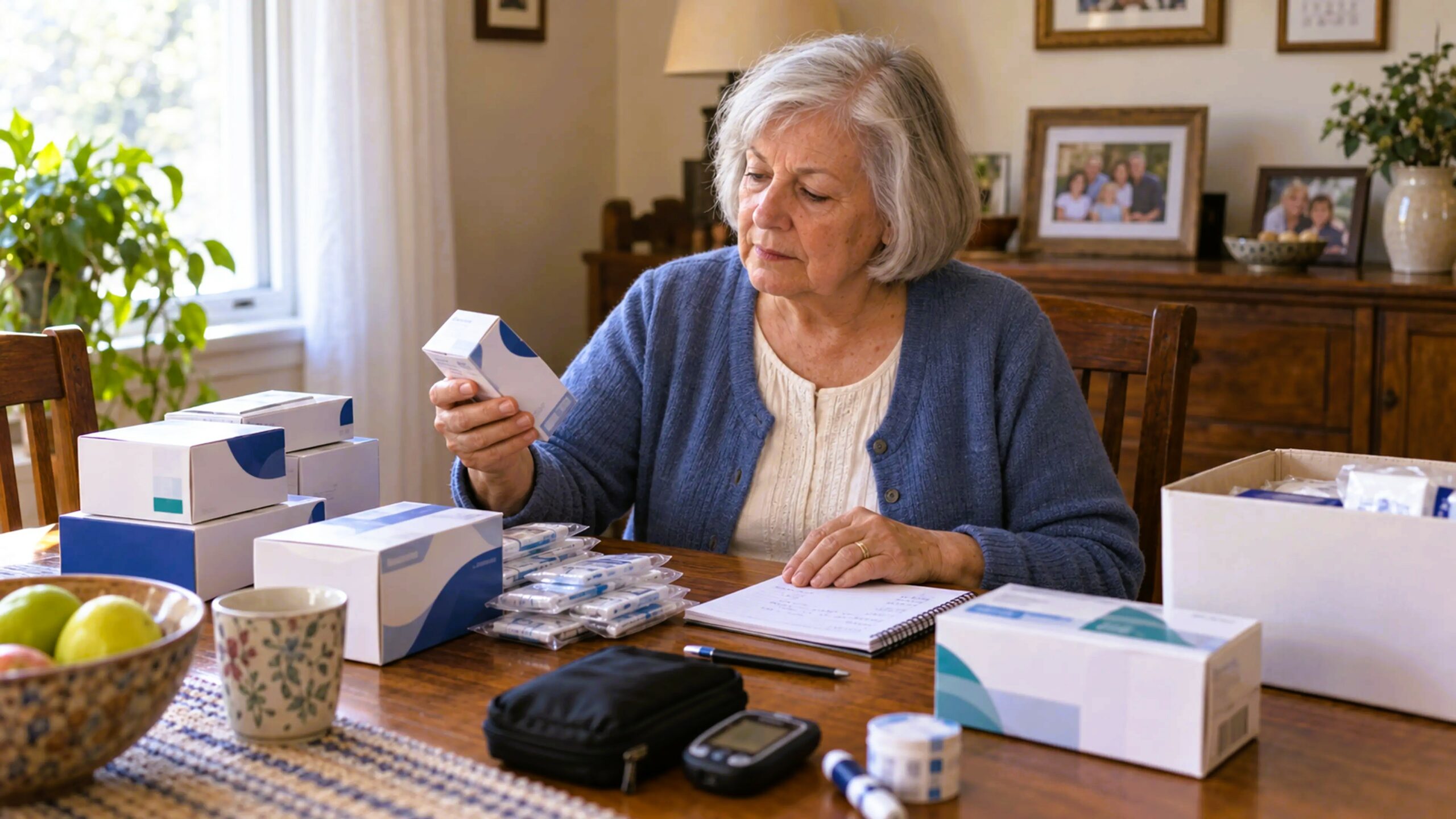
A change in treatment, move, hospital stay, or death can leave a family facing boxes of diabetic supplies and no clear next step. The task can feel both practical and personal, especially when several relatives are helping or paperwork is still being organized.
Begin by protecting the person, not by pricing the products. Set aside anything still needed for care. Then confirm ownership and determine who has authority to make a decision about the remaining property.
Only after those questions are settled should the family compare unopened items with the current Test Strip Buyers catalog. This article offers general practical information, not legal or medical advice.
Separate Current Care From True Leftovers
If your loved one is living, do not treat supplies as extra until the person and the appropriate care professional have determined they are no longer needed. A caregiver should not create a shortage by selling products that could still be part of the current care plan.
If the person has died, move the supplies to a clean, dry, secure area while the family confirms authority. Avoid opening boxes, removing labels, or combining loose contents. Preserving the original condition keeps later options clearer.
The honest tradeoff guide can help an authorized owner consider whether the expected value and preparation time make selling worthwhile, but it should come after the need and ownership checks.
Possession Is Not Always Ownership
A box stored in a family home is not automatically owned by whichever relative finds it. If the original owner is alive, ask for clear permission and confirm that the supplies are true extras. If the original owner has died or cannot consent, authority may depend on estate documents, guardianship, local law, or another legal arrangement.
Test Strip Buyers requires sellers to be the legal owner of the products. When ownership or authority is uncertain, contact the company before opening an order and seek appropriate local legal guidance if necessary. Do not use another person's identity or payment details simply because they appear on the box.
Keep a short record of who authorized the decision and which products were included. The record should be proportionate and should not expose unnecessary health information.
Medicare and Medicaid Markings Need Special Attention
The current FAQ states that diabetic test strips obtained through Medicare or Medicaid and marked for beneficiary use cannot be sold. A family relationship does not remove that restriction.
Read program statements and distribution wording on every box. If a product's source is uncertain, do not guess from the brand, package color, or the name on a pharmacy label. Ask Test Strip Buyers before placing it in the order.
The retail, mail order, and DME guide explains why packaging classifications can lead to different catalog entries. It also reinforces the need to select the version actually in hand rather than the listing with the highest displayed amount.
Protect Privacy Without Damaging the Box
A pharmacy label can contain a name, prescription information, or other personal details. The current FAQ says not to remove the label. It allows personal information to be covered carefully with a soft black marker as long as the product box itself is not marked.
The pharmacy label guide walks through that distinction. Peeling a label can tear the carton, lift print, break a seal, or leave residue that affects condition.
Photograph the product details needed for identification while avoiding unnecessary personal information. Keep those images private and retain them only as long as they are useful for the transaction or family record.
Match Every Item to a Current Product Page
Sort the supplies by product name, model, count, packaging type, reference details, expiration date, and condition. A shared brand does not make different products interchangeable.
For example, a sealed Freestyle Lite Retail 100-count box should be compared with the specific Freestyle Lite Retail 100-count listing, not a general catalog page or a different Freestyle product.
Check the factory seal without opening the box. The sealed-package guide explains why an unused vial or device inside an opened outer carton does not meet the same requirement as a factory-sealed retail package.
Choose a Responsible Next Step for Each Group
Create three groups: supplies that clearly match a current listing, supplies that need clarification, and supplies that do not qualify. Only the first group should move into a quote without another conversation.
For uncertain items, send clear exterior details to support or call before shipping. Do not include an unlisted or ineligible product just to let the receiving team decide, because the current FAQ says unpaid items cannot be returned and may be donated.
For items that cannot be sold, confirm an appropriate donation, take-back, recycling, or disposal option with the organization that will receive them. Requirements vary by product and location. Do not make a medical-safety or legal-disposal decision based on a general blog article.
Document and Pack the Authorized Shipment
Once the decision-maker and eligible items are clear, photograph each exterior package, save the quote, and count the products beside the open shipping carton. Use clean padding and fill empty space so the boxes cannot slide or crush one another.
The post-sale guide explains what happens after the shipment arrives, including inspection and payment. Share that sequence with the family member responsible for monitoring the order.
- Keep all supplies still needed for care.
- Confirm ownership and authority before requesting a quote.
- Exclude Medicare or Medicaid beneficiary-marked test strips.
- Match each sealed item to its specific live product page.
- Save the quote, photos, and tracking number until completion.
Questions Caregivers Ask About Leftover Supplies
Can a caregiver sell a loved one's leftover diabetic supplies?
Only when the caregiver or responsible seller has the legal ownership or authority needed to act and the supplies are true extras. Family relationship or physical possession alone may not establish that authority.
What if my loved one still uses some of the supplies?
Keep everything still needed for care. A caregiver should not sell products that could create a shortage or interfere with the person's current care plan.
Can a family sell test strips marked for Medicare or Medicaid beneficiaries?
No. The current Test Strip Buyers FAQ says test strips obtained through Medicare or Medicaid and marked for beneficiary use cannot be sold.
Should I remove my loved one's pharmacy label?
No. The current FAQ says not to remove it. Personal information may be covered carefully with a soft black marker, provided the product box itself is not marked or damaged.
What should a family do when ownership or eligibility is uncertain?
Pause before requesting a quote or shipping. Contact Test Strip Buyers about product eligibility and seek appropriate local legal guidance when ownership, estate authority, or consent is unclear.
Confirm Ownership Before Sorting a Loved One's Supplies
Set aside all supplies still needed for care, identify the person with legal authority, and compare only confirmed extras with their exact current product pages. Call Test Strip Buyers at (800) 439-6445 before shipping if ownership, program wording, or product eligibility is unclear.