
Looking for CGM Buyers? What to Know Before Selling Extra CGM Supplies
- Matt Frank
- October 10, 2026
- 11:00 am
In This Article
Extra CGM supplies can add up surprisingly fast. Maybe you've switched systems, your prescription changed, or you simply ended up with sensors or other supplies you know you won't use.
Whatever the reason, those unopened boxes don't necessarily have to sit in a drawer until they expire. If they're eligible, selling them to reputable CGM buyers may allow you to recover some of their value instead.
Before requesting a quote, though, it helps to know exactly what you have. CGM products can look similar while having different model numbers, reference codes, expiration requirements, and values. Taking a few minutes to check those details can make the selling process much easier.
Why Do People End Up With Extra CGM Supplies?
There isn't one reason people find themselves with extra continuous glucose monitoring supplies.
Someone may switch from one CGM system to another, leaving unopened sensors from the previous system behind. A prescription or insurance change can also affect which supplies someone uses going forward.
In other cases, there may simply be more supplies on hand than someone expects to use before switching products.
Whatever caused the extras, the important thing is not to assume they're worthless—or automatically eligible to sell. Check the exact product first. A factory-sealed CGM product that's currently listed by a buyer may still have value, while an opened, expired, damaged, or unlisted product may not qualify.
What CGM Products Do Buyers Accept?
"CGM supplies" is a broad term. Buyers don't necessarily purchase every sensor, receiver, or device from every manufacturer.
Depending on the current catalog, accepted products may include:
- Factory-sealed CGM sensors
- Certain CGM transmitters
- Selected receivers and readers
- Specific models and package configurations
The exact model matters. Test Strip Buyers currently lists several Dexcom products, including specific G6 and G7 products, as separate catalog entries.
Don't rely on the brand name alone. Check the current product catalog and match what's printed on your package with the exact listing before requesting a quote or sending anything.
Dexcom vs. FreeStyle Libre: Know What You Have
Dexcom and FreeStyle Libre are two well-known names in continuous glucose monitoring, but that doesn't mean their products are interchangeable from a buyer's perspective.
Even within the same brand, different generations and package configurations may have their own listings.
For example, Test Strip Buyers separates Dexcom products by generation, pack size, receiver or sensor type, and—in some cases—reference code. A Dexcom G6 package shouldn't be submitted as a G7 simply because both carry the Dexcom name.
The same idea applies to FreeStyle Libre. A reader and a sensor are different products, and Libre 14 Day, Libre 2, and Libre 3 products need to be identified correctly.
If you have Libre supplies, the guide to FreeStyle Libre readers and sensors provides a useful example of why matching the exact product matters.
One more thing worth knowing: don't assume that every CGM brand is currently accepted. Product availability changes. Always use the live catalog rather than an old list or article when deciding what to send.
Why Expiration Dates and Packaging Matter
Two details can quickly affect whether CGM supplies qualify: the expiration date and the condition of the package.
CGM expiration requirements aren't something you should guess. Test Strip Buyers uses product-specific listings, which means the appropriate date requirement or selection can depend on the exact CGM product you have.
The company's guide to CGM expiration rules for Dexcom and Libre explains why sellers should match the exact product before evaluating its expiration date.
Condition matters too. Keep products factory sealed and protect the packaging from crushing, tearing, moisture, and other damage.
It's also important to keep identifying information readable. Model numbers, reference codes, expiration dates, and other package details can help determine which listing applies to your product.
What Affects the Value of CGM Supplies?
There isn't one standard price for every CGM sensor or receiver.
A few details can influence the current offer:
- The brand and exact model
- Generation and package configuration
- Reference or product codes when applicable
- Expiration date
- Condition of the packaging
- Current buyer demand and pricing
This is why two products carrying the same brand name can have different values.
Packaging classifications can matter as well. The Test Strip Buyers article about retail, mail-order, and DME box labels shows how seemingly small differences on a package can correspond to different product listings.
Instead of estimating based on the brand alone, identify the exact product and use its current listing.
How Does Selling CGM Supplies Work?
If you've never sold unused CGM supplies before, the process is simpler than you might expect.
- Gather the unopened CGM products you no longer need.
- Identify the exact brand, model, pack, and reference code when applicable.
- Check the expiration date and packaging condition.
- Find the exact product in the buyer's current catalog.
- Review the current offer and submit your order.
- Pack the qualifying products carefully.
- Ship them using the provided instructions.
- Wait for inspection and payment for accepted products.
Test Strip Buyers covers shipping for qualifying orders and releases payment after supplies have been received and inspected.
If you're sending CGMs along with other diabetic supplies, the company's step-by-step selling guide also explains the basic quote, packing, shipping, and payment process.
What Should You Look for When Comparing CGM Buyers?
If you're comparing CGM buyers online, don't base your decision on a big payout claim alone.
A reputable buyer should make it reasonably easy to understand what products are accepted, how products are evaluated, how shipping works, and when payment is issued.
Look for:
- Specific product listings rather than vague promises to buy everything
- Clear expiration and condition requirements
- Transparent shipping instructions
- An explanation of the inspection process
- Accessible contact information if you have questions
You should know what you're sending and what to expect before your package leaves your hands.
Be especially cautious about sending products that aren't listed. If you're unsure about a particular CGM model, ask the buyer first rather than assuming it'll be accepted.
Check Your CGM Products Before You Sell
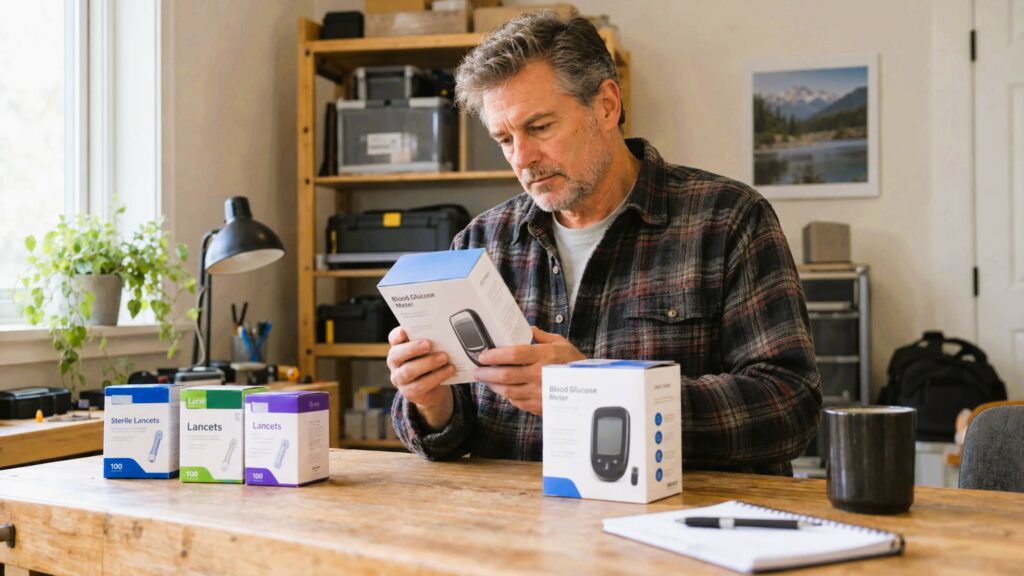
Before requesting a quote, grab the actual box and take a close look at it.
Find the exact product name, generation, quantity, expiration date, and any relevant reference codes. Make sure the package is still sealed and in acceptable condition.
Then compare those details with the current listing rather than choosing the closest-looking product.
This small step can prevent quote discrepancies and make the inspection process smoother once your shipment arrives.
If you have unused Dexcom, FreeStyle Libre, or other diabetic supplies, check the current Test Strip Buyers catalog to see which products are being accepted and what your eligible supplies may be worth.